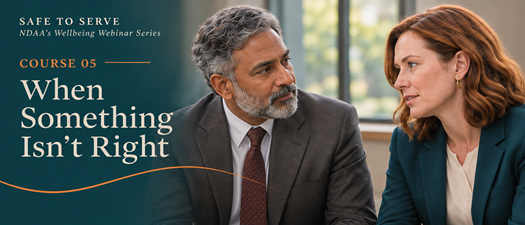
Wellbeing Series: Safe to Serve | Course 5: When Something Isn’t Right
Join Us Virtually
When Something Isn't Right
April 8, 2027 | 2:00-3:30 p.m. Eastern
(Free for Members!)
OverviewA colleague does not want to talk. Someone you supervise shares a personal concern and asks for a change at work. An employee asks an office leader for help but worries about how private information was handled before. The next response can affect whether the person feels heard, understands what can happen, and knows who will act. When Something Isn’t Right gives participants practice with these difficult moments. Through prosecution-specific scenarios, demonstrations, and opportunities to try and revise their own language, participants develop concern-based openings, respond to reluctance and disclosures, explain boundaries, and connect people with appropriate support. They examine how responsibility changes when acting as a colleague, supervisor, or organizational leader, then make the next action and follow-up clear. What You Will Do in This Program
|
Potential CLE CategoriesWellbeing or professional development; prevention or detection of mental health and substance-use concerns only where recognized and supported by approved content. Categories vary by jurisdiction. Approval and credit hours are not confirmed; these potential categories do not establish course eligibility. |
CostMembers: Free! Please note that this course has been approved for individual attendees only. If you intend to broadcast this to a group, please contact us at training@ndaajustice.org. |
Eligibility:NDAA is committed to serving prosecutors and the professionals who support the prosecution function. Attendance is limited to prosecutors, investigators, victim advocates, witness coordinators, paralegals in local, state, tribal, federal, and military government attorneys' offices, law enforcement professionals, and other members of the multidisciplinary team who work in or closely with prosecution. If you are not sure about your eligibility, please contact ssencer@ndaajustice.org |
General Questions?
Please contact training@ndaajustice.org.
| Credits | Price | |
|---|---|---|
|
Member Ticket
Registration Opens 11/9/26 at 12:00 AM EDT
|
1.25 | FREE |
| Credits | Price | |
|---|---|---|
|
Non-Member Ticket
Registration Opens 11/9/26 at 12:00 AM EDT
|
1.25 | $75.00 |
Anticipated Continuing Legal Education Credits 1.25 hour
NDAA will apply for CLE credit in Illinois, Kansas, Mississippi, Missouri, Ohio, Pennsylvania, Tennessee, Texas, and Virginia based on state requirements and guidelines. All other attorneys seeking CLE credit should contact their state bar for more information. At the conclusion of the course and after completion of the electronic evaluation survey, all attendees will receive a uniform continuing education certificate that they may use to report their continuing education hours to their state bar or reporting agency. Questions regarding CLE can be directed to cle@ndaajustice.org
For More Information:
Part of the Safe to Serve SeriesWhen Something Isn’t Right is the fifth of six connected courses and can be taken individually. It develops the conversation and follow-through skills that come after recognizing a concern. Designed For Prosecutors, supervisors, and office leaders who may receive a concern or disclosure and need to respond with clarity, dignity, and appropriate boundaries. |
|
Key Topics Include
|
|
Take Home Resources
|